
Clemson University
Clemson University: A Premier Research Institution in a Vibrant College Town
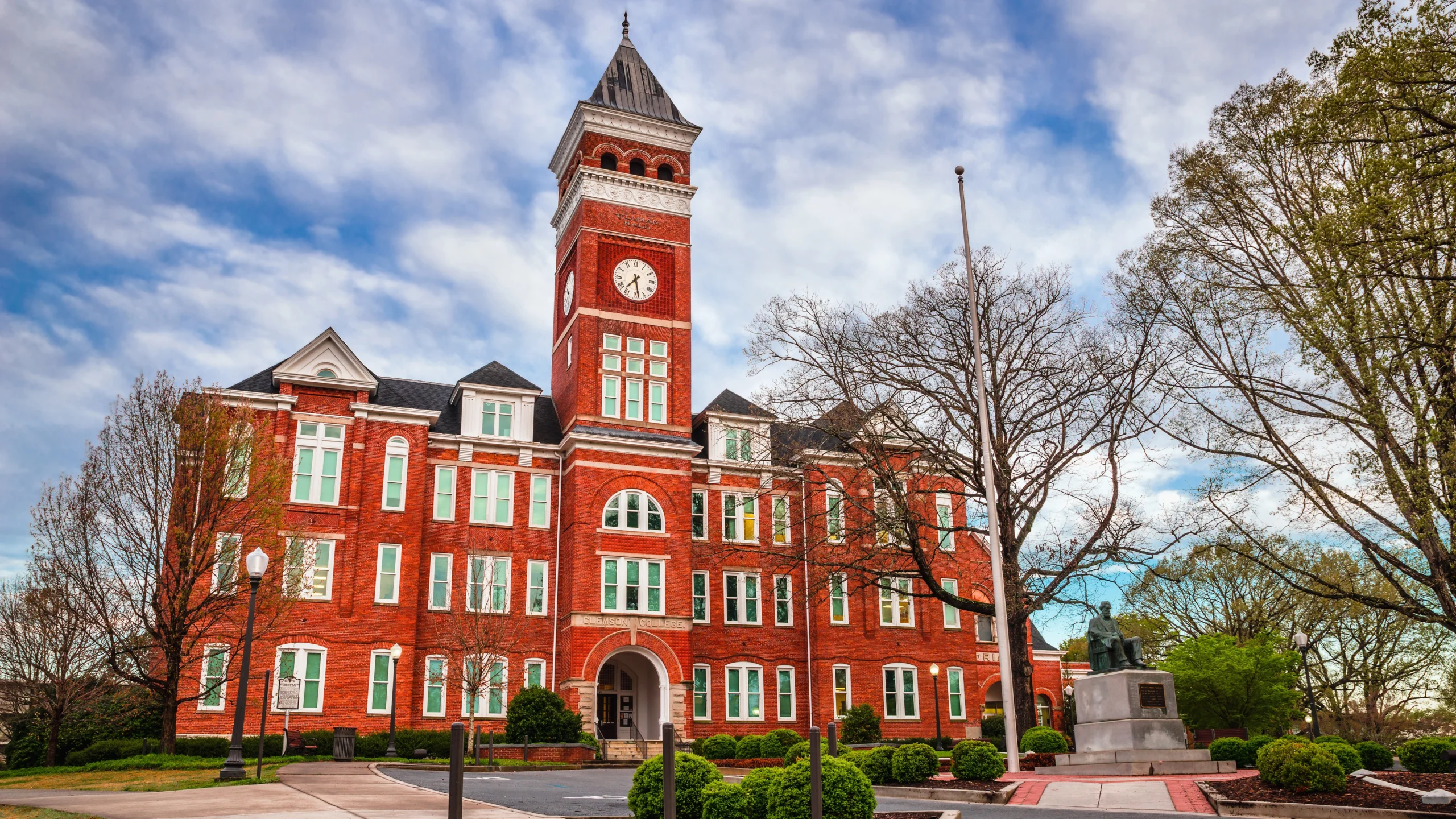
Nestled in Clemson, South Carolina, Clemson University is a public research university celebrated for its academic excellence, spirited Tiger pride, and deep connection to a charming college town surrounded by natural beauty. Clemson, with a city population of approximately 17,986 and part of the Greenville-Spartanburg-Anderson metro area with 1.5 million residents, is a lively hub in the Upstate region, known for its blend of small-town charm and economic growth. The local economy thrives on education, manufacturing, and technology, with major employers like Clemson University, Michelin, and BMW nearby. Clemson offers a vibrant lifestyle with attractions like Lake Hartwell, the South Carolina Botanical Garden, and dining from local barbecue to modern eateries. Events such as Clemson Fest and the Spittoono festival draw thousands. Clemson’s 1,400-acre campus, featuring landmarks like Tillman Hall and Memorial Stadium, is home to over 28,000 students. Living in Clemson provides access to this dynamic community and strategic opportunities, such as establishing South Carolina residency for educational and real estate benefits.
Clemson: A Scenic and Growing College Town
Clemson’s city population of 17,986 and metro area population of 1.5 million highlight its role as a cultural and academic center in South Carolina’s Upstate, with a 3.1% population growth from 2020 to 2024. The economy is bolstered by education (Clemson University), manufacturing (Michelin’s North American headquarters), and technology, with the region ranked among the top U.S. areas for job growth and affordability. This economic vitality supports a lifestyle rich in outdoor recreation and community spirit. Over 50 parks, including Clemson Experimental Forest and Lake Keowee, offer hiking, boating, and festivals, while the Blue Ridge Mountains provide scenic escapes. The city’s 270+ days of sunshine enhance its appeal for outdoor enthusiasts.
Dining in Clemson is diverse, with over 100 restaurants reflecting its Southern roots and college-town vibe. Local favorites like The Smokin’ Pig serve award-winning barbecue, while upscale spots like Rick Erwin’s Clemson offer modern cuisine. Cultural landmarks include the Brooks Center for the Performing Arts, Fort Hill Plantation, and the Bob Campbell Geology Museum. Events like the Clemson Literary Festival, First Friday Tailgate, and nearby Spoleto Festival attract crowds. The real estate market, fueled by Clemson’s growth and the university’s prominence, makes the area an attractive place to live and invest, with neighborhoods near campus offering strong rental potential.
A Research Leader with Tiger Pride
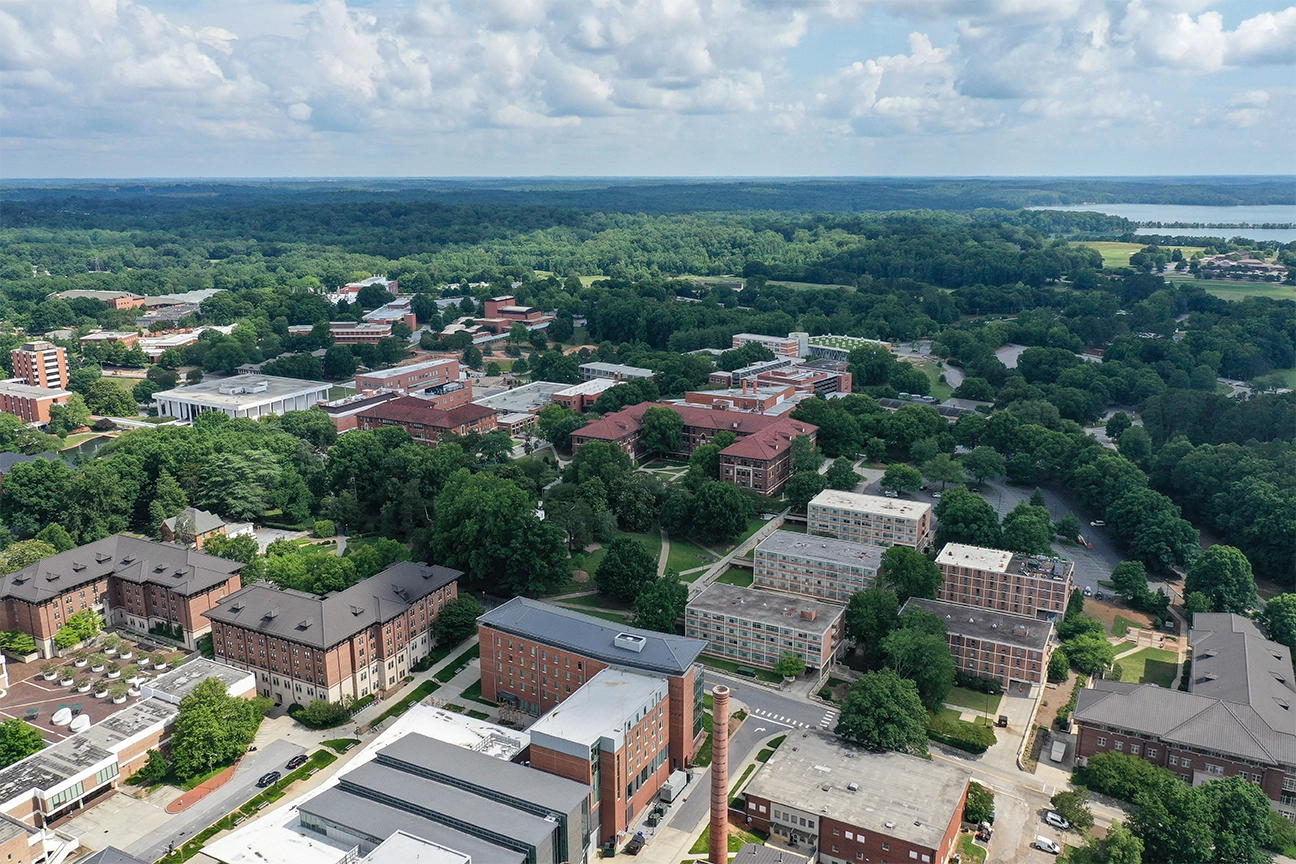
Founded in 1889, Clemson University is a public land-grant research university classified as an R1 Doctoral University with very high research activity. With an enrollment of 28,747 students (22,566 undergraduates and 6,181 graduates) in fall 2023, Clemson maintains a 16:1 student-to-faculty ratio, fostering a diverse community with students from 50 states and 89 countries. The 1,400-acre main campus in Clemson, complemented by research facilities like the Clemson University International Center for Automotive Research (CU-ICAR) in Greenville, features 212 buildings, including the Cooper Library and the Watt Family Innovation Center. With $238 million in research expenditures in 2023, Clemson drives innovation in automotive engineering, agriculture, and health. Living in Clemson offers access to this academic powerhouse and opportunities for residency-driven tuition savings and real estate investment.
Campus Size
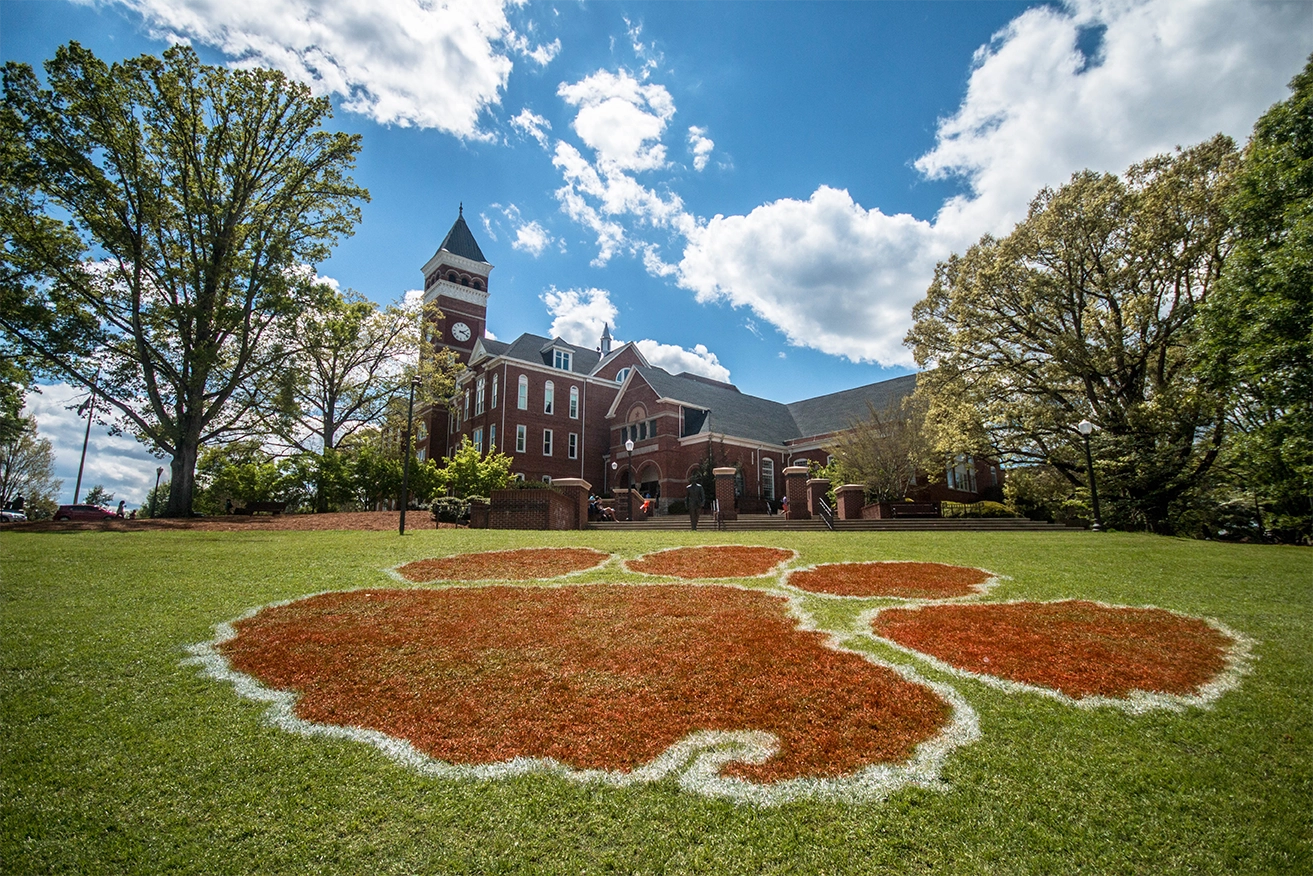
The 1,400-acre main campus in Clemson, set against the backdrop of Lake Hartwell, includes landmarks like Tillman Hall’s iconic bell tower and the Academic Success Center. Research facilities like CU-ICAR in Greenville and the Archbold Research and Education Center in the Dominican Republic extend Clemson’s reach. The campus’s proximity to downtown Clemson and easy access to Greenville, 30 miles away, enhances its vibrant atmosphere.
Off-Campus Living and Nightlife
Students often live off-campus in neighborhoods like Downtown Clemson, Central, and Pendleton, each offering unique vibes and investment potential. Downtown Clemson, steps from campus, features student apartments and rentals, ideal for rental income due to high demand. Central’s affordable homes and Pendleton’s historic properties attract diverse residents. These areas, with appreciating property values, make Clemson’s real estate market compelling. Nightlife thrives in Downtown Clemson, with bars like Tiger Town Tavern and live music at The Esso Club, a historic sports bar. Study Hall offers craft beers, while nearby Greenville’s Fluor Field hosts minor league baseball. Proximity to Clemson supports short-term rentals during events like football weekends and Welcome Back Festival.
Student Organizations and Activities
With over 500 student organizations, Clemson fosters a vibrant “Tiger Nation.” Groups like the Central Spirit and TigerLive promote engagement, while traditions like First Friday Parade unite students. Greek life includes over 40 fraternities and sororities under councils like IFC and NPHC, with chapters like Alpha Phi hosting philanthropy events. Cultural clubs, such as the Black Student Union and International Student Organization, offer inclusive programming, while sustainability clubs like the Clemson Environmental Club lead green initiatives. Traditions like Tigerama, Homecoming Bow Building, and Orange Fridays unite students. Free resources, including tutoring and career services at the Michelin Career Center, enhance the Tiger experience.
Benefits of In-State Residency at Clemson
Establishing South Carolina residency offers significant advantages for Clemson students, particularly in tuition savings. By meeting residency requirements, typically after living in the state for 12 consecutive months while maintaining employment or other qualifying factors, students can qualify for in-state tuition. For the 2024-2025 academic year, in-state tuition and fees at Clemson are $16,184 per year, compared to $40,196 for out-of-state students, resulting in annual savings of $24,012. Over a four-year degree, this translates to savings of $96,048, making education more accessible and freeing up funds for housing or graduate studies. In-state students also gain priority access to scholarships like the Palmetto Fellows, offering up to $6,700 annually. Residency fosters integration into Clemson’s vibrant community, aligning with opportunities in the region’s thriving job market, particularly in manufacturing and technology, and supporting investment in Clemson’s robust real estate market.
In-State vs Out-of-State Tuition Comparison (2024-2025 Rates)
| Duration | In-State Tuition | Out-of-State Tuition | Savings |
|---|---|---|---|
| 1 Year | $16,184 | $40,149 | $24,012 |
| 2 Years | $32,368 | $80,392 | $48,024 |
| 3 Years | $48,552 | $120,588 | $72,036 |
| 4 Years | $64,736 | $160,784 | $96,048 |
Top Academic Programs
Clemson offers over 80 undergraduate majors and 130 graduate programs across seven colleges, with research strengths in engineering, agriculture, and business. Its $238 million in research supports initiatives like the Center for Advanced Manufacturing and the Clemson University Restoration Institute. The top five undergraduate programs include:

Mechanical Engineering
The College of Engineering, ranked top 30 nationally, collaborates with BMW and General Electric, with graduates in high demand.

Business Administration
The Wilbur O. and Ann Powers College of Business excels in supply chain management, with alumni at Michelin and Deloitte.

Agriculutral Science
The College of Agriculture, Forestry and Life Sciences leads in sustainable agriculture, with research at the Pee Dee Research Center.

Computer Science
The School of Computing offers AI and cybersecurity tracks, with graduates at tech firms like Google.

Nursing
The College of Behavioral, Social and Health Sciences achieved a 98% NCLEX pass rate in 2023, with graduates at Prisma Health.
Clemson’s 170,000+ Alumni Include

Strom Thurmond
Strom Thurmond (1902–2003), a Clemson University graduate, served nearly 48 years in the U.S. Senate (1954–2003), the longest tenure in history until 2023. Rising from South Carolina teacher and judge to governor (1947–1951), he ran for president in 1948 as a segregationist Dixiecrat, carried four states, and later staged the longest filibuster ever (24+ hours) against the 1957 Civil Rights Act. Switching to the Republican Party in 1964, he became a pillar of the GOP’s Southern Strategy while gradually softening some positions in later decades. At his death at age 100, it was publicly confirmed he had fathered a biracial daughter in 1925 with his family’s teenage Black housekeeper. Thurmond’s career encapsulates the dramatic political and racial realignments of the 20th-century South.

Lee Brice
Lee Brice, born in Sumter, South Carolina in 1979, attended Clemson University in the late 1990s and early 2000s, studying engineering before shifting toward music. What began as his time on campus—where he played football briefly and immersed himself in the college environment—evolved into a successful country music career: he broke through with hits like “A Woman Like You” (No. 1 on Billboard), “Hard to Love,” “I Don’t Dance,” and “Rumor,” earning multiple No. 1 singles, ACM and CMA nominations, and recognition as a songwriter for artists like Garth Brooks and Jason Aldean.
His ties to Clemson endure through his pride as a Tiger alum, often referencing his time in Clemson in interviews and wearing gear to show support. He has been featured in Clemson alumni spotlights for his creative success and inspires students in music, engineering, and entrepreneurship with his pivot story. Today, his legacy enhances Clemson’s reputation for nurturing diverse talents beyond traditional fields, encourages artistic pursuits among Tigers, and reflects his gratitude to the university community that helped shape his early path to stardom in country music.

Dabo Swinney
Dabo Swinney, born William Christopher Swinney in Birmingham, Alabama in 1969, walked on to the University of Alabama football team in 1989 as a wide receiver, earning a scholarship and lettering on three squads, including the 1992 national championship team, before graduating with a bachelor’s degree in commerce and business administration in 1993. What began as his playing career under coaches like Tommy Bowden (his position coach at Alabama) evolved into a coaching path that brought him to Clemson University in 2003 as wide receivers coach and recruiting coordinator under Bowden. He ascended to interim head coach in October 2008 amid Bowden’s resignation, was named permanent head coach in December 2008, and transformed the Clemson Tigers into a national powerhouse—leading them to ACC titles, multiple College Football Playoff appearances, and national championships in 2016 and 2018, while becoming the winningest coach in Clemson and ACC history with over 180 victories (surpassing legends like Bobby Bowden in conference wins).
Though not a Clemson undergraduate, Swinney was named an honorary alumnus alongside his wife Kathleen by the Clemson Alumni Association in 2017, recognizing his profound impact on the university and community since joining the staff in 2003. His ties to Clemson endure through his legendary leadership, emphasis on player development (including a 98%+ graduation rate for senior lettermen during his tenure), and substantial philanthropy that bolsters the program and beyond. Key contributions include a $1 million pledge from Dabo and Kathleen in 2016 to IPTAY (Clemson’s athletic fundraising arm) for football facilities and support; ongoing work through Dabo’s All In Team Foundation, which has raised and donated over $13 million to local charities, including lead gifts exceeding $750,000 for mobile mammography coaches in 2020 and 2023 to advance women’s health in the Upstate; and personal commitments to community initiatives like homelessness support and youth programs. He has returned for countless campus events, championship celebrations, academic honors recognitions, and motivational talks, while his “all in” philosophy—focusing on family, faith, fundamentals, and fierce competition—has become synonymous with Clemson culture.

David Beasley
David Beasley (born 1957 in Darlington, South Carolina), a Clemson University graduate, served as South Carolina’s governor from 1995 to 1999 as the state’s first Republican in over a century, notably risking re-election by calling for removal of the Confederate flag from the State House dome. After leaving office, he shifted from conservative politics to global humanitarian work and has led the United Nations World Food Programme (WFP) since 2017, guiding it through the COVID-19 hunger surge, the Ukraine war, and multiple famines, an effort that earned WFP the 2020 Nobel Peace Prize. Now in his second term as WFP executive director, Beasley is widely recognized for bipartisan leadership and his urgent advocacy to end world hunger by 2030.

Nancy O’Dell
Nancy O’Dell (born 1966 in Sumter, South Carolina) is an award-winning entertainment journalist and former Miss South Carolina (1987) who graduated summa cum laude from Clemson University in 1990. She rose to national prominence as co-anchor of Access Hollywood (1996–2009) and later Entertainment Tonight (2011–2019), earning multiple Emmys and AP honors while covering red carpets for the Oscars, Emmys, and Golden Globes. After leaving daily television in 2019, she authored books, launched a furniture line, and in 2024 debuted as host and producer of the syndicated true-crime series Crime Exposé with Nancy O’Dell, while continuing extensive charity work.
Why Clemson and Clemson University are Great Choices for Investing in College Properties
UT Austin’s 50,000+ students and Austin’s 7.2% population growth (2020–2024) create a robust real estate market for college properties. Neighborhoods like West Campus and Hyde Park, within 1.5 miles of campus, offer high rental demand and appreciation potential. Median home prices ($560,000 in 2025) and consistent student turnover ensure stable rental income, with West Campus properties yielding $900–$1,500/bedroom. Events like SXSW boost short-term rental opportunities. In-state tuition savings ($29,588/year) make Austin attractive for families, increasing demand for nearby housing. The city’s tech-driven economy, with companies like Tesla and Apple, supports long-term property value growth, making UT Austin-adjacent investments a strategic choice.