
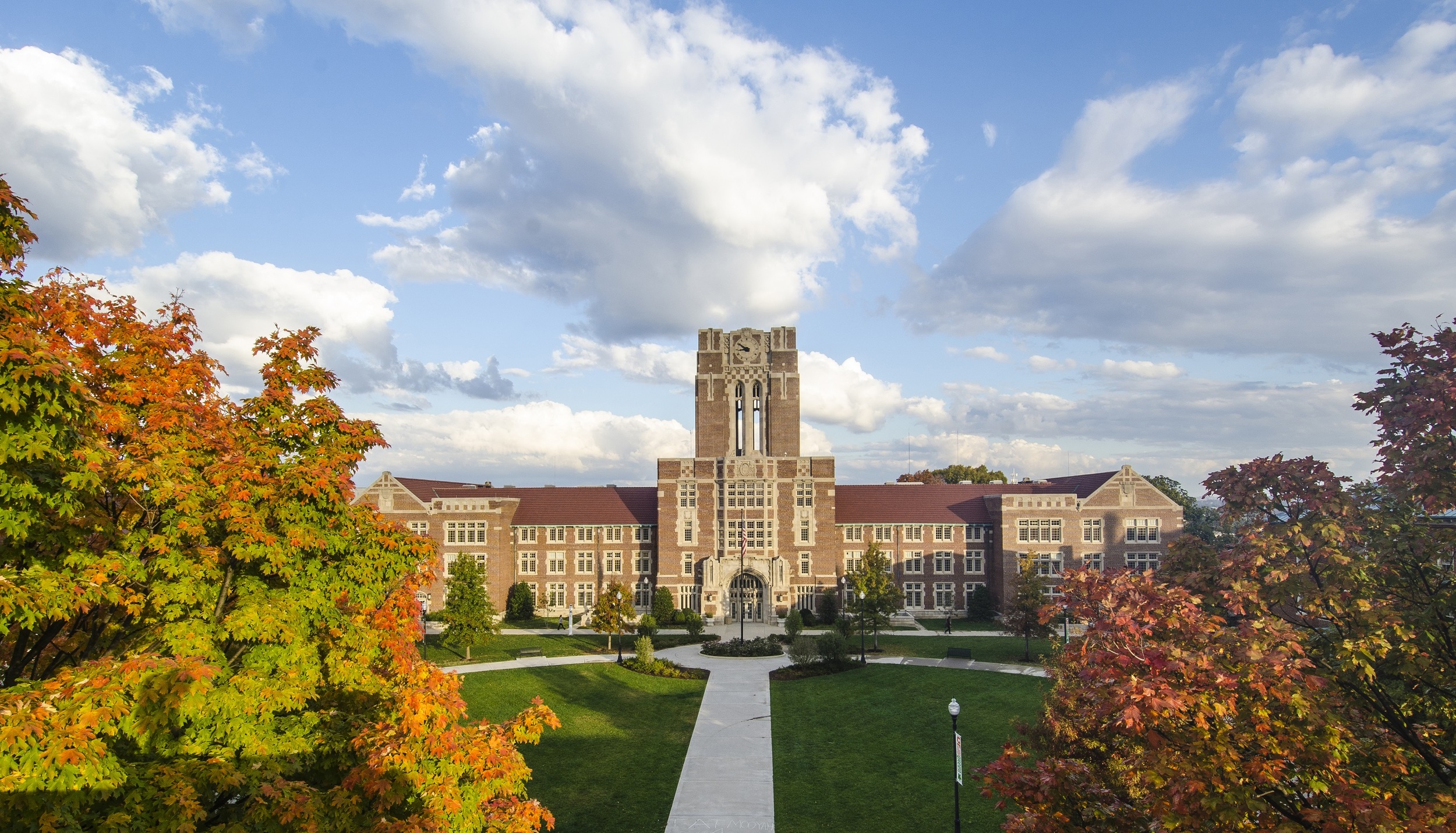
University of Tennessee in Knoxville
University of Tennessee: A Vibrant Institution in the Heart of Knoxville
Situated in Knoxville, Tennessee, the University of Tennessee (UT) is a public research university celebrated for its academic excellence, passionate Volunteer spirit, and deep connection to Tennessee’s cultural heritage. Knoxville, with a city population of approximately 195,400 and part of the Knoxville metro area with 914,000 residents, is a dynamic city known for its scenic beauty, growing economy, and vibrant arts scene. The local economy thrives on education, manufacturing, and technology, with UT as a major driver alongside companies like Regal Entertainment and Oak Ridge National Laboratory nearby. Knoxville’s lifestyle blends urban energy with outdoor recreation at Ijams Nature Center, dining from Southern comfort food to upscale restaurants, and events like the Dogwood Arts Festival. UT’s 910-acre campus, featuring the iconic Ayres Hall, hosts 34,317 students. Living in Knoxville offers access to this academic powerhouse and opportunities for establishing Tennessee residency for educational and real estate benefits.
Knoxville: A Cultural and Economic Hub
Knoxville’s city population of 195,400 and metro area population of 914,000 reflect its status as a thriving center for education and innovation, with a 2.8% population growth from 2020 to 2024. The economy is driven by UT, manufacturing (Denso), and research (Oak Ridge National Laboratory), with Knoxville ranking as a top city for affordability and job growth. This economic vitality supports a lifestyle rich in culture and recreation. Over 70 parks, including World’s Fair Park and the Urban Wilderness, offer hiking, biking, and kayaking, while the Tennessee River provides scenic beauty. The city’s 270+ days of sunshine enhance its appeal for outdoor enthusiasts.
Dining in Knoxville is diverse, with over 800 restaurants showcasing Southern and global flavors. Local spots like Calhoun’s on the River serve BBQ ribs, while Dead End BBQ offers regional favorites. Upscale venues like J.C. Holdway, a James Beard nominee, provide fine dining. Cultural landmarks include the Knoxville Museum of Art, East Tennessee History Center, and the Bijou Theatre. Events like the Rhythm N’ Blooms Festival, Market Square Farmers’ Market, and Big Ears Festival draw crowds. The real estate market, fueled by UT’s growth and Knoxville’s economic strength, makes the city attractive for students and investors, with neighborhoods near campus offering strong rental potential.

A Research Leader with Volunteer Pride
Founded in 1794, the University of Tennessee is the flagship public university of the UT System, recognized for its research excellence and vibrant community. With an enrollment of 34,317 students (26,947 undergraduates and 7,370 graduates) in fall 2024, UT maintains a 17:1 student-to-faculty ratio, fostering a diverse and engaged student body. The 910-acre campus in Knoxville features 294 buildings, including Neyland Stadium and the John C. Hodges Library. Classified as an R1 Doctoral University with very high research activity, UT’s $360 million in research expenditures in 2023 supports advancements in engineering, agriculture, and business. Living in Knoxville offers access to this academic leader and opportunities for residency-driven tuition savings and real estate investment.
Campus Size
The 910-acre campus, one of Tennessee’s largest, spans Knoxville and includes landmarks like Ayres Hall and the Torchbearer statue. The Haslam College of Business and the Tickle College of Engineering are architectural highlights, while the 1,000-acre UT Arboretum extends research and recreational opportunities. The campus’s proximity to downtown Knoxville enhances its vibrant atmosphere. In May 2025, UT hosted a commencement ceremony at Thompson-Boling Arena at Food City Center, celebrating graduates from programs like business and engineering, highlighting its academic diversity. A $100 million renovation of Neyland Stadium and a $60 million interdisciplinary research facility are planned for completion by 2026.
Off-Campus Living and Nightlife
Students often live off-campus in neighborhoods like Fort Sanders, Old City, and Sequoyah Hills, each offering unique vibes and investment potential. Fort Sanders, near UT, features student apartments ideal for rental income due to high demand. Old City’s lofts and Sequoyah Hills’ historic homes attract diverse residents. These areas, with appreciating property values, make Knoxville’s real estate market compelling. Nightlife thrives in Market Square, with bars like Preservation Pub and Scruffy City Hall hosting live music. Old City’s Southern Grit offers Southern cuisine, while Cumberland Avenue’s Hanna’s draws students. Proximity to UT supports short-term rentals during events like the Dogwood Arts Festival and homecoming.
Student Organizations and Activities
With over 400 student organizations, UT fosters a vibrant “Volunteer Nation.” Groups like the Pride of the Southland Band and Vol to Vol promote community, while Homecoming unites students with parades and tailgates. Greek life includes over 40 fraternities and sororities under councils like IFC and NPHC, with chapters like Sigma Phi Epsilon and Zeta Phi Beta hosting philanthropy events. Faith-based clubs, such as UT Christian Student Fellowship and UT Hillel, offer spiritual programming, while the Multicultural Mentoring Program hosts cultural events. Sustainability clubs like Vols Go Green lead eco-friendly initiatives, aligning with Knoxville’s environmental focus. Traditions like the Vol Walk, Torch Night, and Orange and White Fridays unite students. Free resources, including tutoring and career services at the Center for Career Development, enhance the Volunteer experience.
Benefits of Tennessee Residency at UT
Establishing Tennessee residency offers significant advantages for students attending the University of Tennessee, particularly in terms of tuition savings and community integration. By meeting Tennessee residency requirements, typically achieved after living in the state for 12 consecutive months while maintaining employment or other qualifying factors, students can qualify for in-state tuition rates. For the 2024-2025 academic year, in-state tuition and fees at UT are $13,620 per year (based on two 15-hour semesters), compared to $32,138 for out-of-state students, resulting in annual savings of $18,518. Over a four-year degree, this translates to savings of $74,072, making higher education more affordable and allowing students to allocate resources toward other goals, such as housing or graduate studies. In-state students also benefit from priority access to Tennessee-specific scholarships, such as the HOPE Scholarship, which awards up to $6,000 annually to eligible residents with a 3.0 GPA or high ACT/SAT scores. Residency fosters deeper integration into Knoxville’s vibrant community, aligning with opportunities in the city’s growing job market, particularly in education, manufacturing, and technology, and supporting long-term investment in Knoxville’s dynamic real estate market.
In-State Tuition Savings Over Time
| Duration | In-State Tuition | Out-of-State Tuition | Savings |
|---|---|---|---|
| 1 Year | $0.00 | $0.00 | $0.00 |
| 2 Years | $0.00 | $0.00 | $0.00 |
| 3 Years | $0.00 | $0.00 | $0.00 |
| 4 Years | $0.00 | $0.00 | $0.00 |
Top Academic Programs
UT offers over 360 undergraduate degrees and 150 graduate programs across 11 colleges, with research strengths in engineering, business, and agriculture. Its $360 million in research supports initiatives like the Institute of Agriculture and the UT-ORNL Joint Institute for Computational Sciences. The top five undergraduate programs include:

Business Administration
The Haslam College of Business, ranked #26 nationally, excels in supply chain management and finance, with alumni at FedEx and Pilot Flying J.
Engineering
The Tickle College of Engineering, ranked #58 nationally, leads in nuclear and mechanical engineering, with research at the UT Space Institute.
Agricultural Science
The Herbert College of Agriculture, ranked #20 globally, advances food security and animal science, with research at the UT AgResearch Centers.
Communication
The College of Communication and Information trains leaders in journalism and public relations, with alumni at Knox News and ESPN.
Nursing
The College of Nursing, ranked #25 nationally, prepares healthcare leaders, with clinical rotations at UT Medical Center.
University of Tennessee’s 250,000+ alumni include

Min Kao
Min H. Kao, the billionaire co-founder and former executive chairman of Garmin Ltd., is not a University of Memphis alumnus. He earned his bachelor’s degree from National Taiwan University and both his master’s and Ph.D. in electrical engineering from the University of Tennessee, Knoxville. A member of the Forbes 400 with a net worth exceeding $5 billion, Kao is one of UT Knoxville’s most generous donors (the Min Kao Electrical Engineering and Computer Science Building bears his name after major gifts totaling over $30 million). While he has no formal connection to the University of Memphis, his transformative impact on GPS technology and philanthropy for engineering education has made him one of the most prominent Taiwanese-American alumni in higher education.
Howard Baker Jr
Howard H. Baker Jr. (1925–2014), one of the most respected statesmen in modern American history, is not an alumnus of the University of Memphis. He earned his undergraduate degree from the University of Tennessee, Knoxville and his law degree from UT’s College of Law in 1949. The legendary Republican U.S. Senator from Tennessee (1967–1985), Senate Majority Leader, Watergate committee vice chairman, Reagan White House Chief of Staff, and U.S. Ambassador to Japan is forever linked to his beloved UT Knoxville, where the Howard H. Baker Jr. School of Public Policy and Public Affairs now bears his name. While Baker’s influence reached every corner of Tennessee, he has no formal academic or alumni connection to the University of Memphis.
Phillip Fulmer
Phillip Fulmer, the College Football Hall of Fame coach who led Tennessee to the 1998 national championship, is not an alumnus of the University of Memphis. A native of Winchester, Tennessee, Fulmer earned both his bachelor’s (1972) and master’s degrees from the University of Tennessee, Knoxville, where he also played offensive lineman for the Volunteers. He spent his entire coaching and administrative career at UT, posting a 152–52 record as head coach from 1992 to 2008, winning two SEC titles and the program’s most recent national crown. After retiring from the sidelines, he later served as UT’s athletic director from 2017 to 2021. Though his Volunteers teams regularly faced Memphis on the gridiron, Fulmer’s lifelong academic, athletic, and professional ties remain exclusively with the University of Tennessee.
Lamar Alexander
Lamar Alexander, one of Tennessee’s most accomplished public servants, is not an alumnus of the University of Memphis. A Phi Beta Kappa graduate of Vanderbilt University (B.A., 1962) and New York University School of Law (J.D., 1965), Alexander served as Tennessee’s governor (1979–1987), president of the University of Tennessee system (1988–1991), U.S. Secretary of Education (1991–1993), and U.S. Senator (2003–2021), where he chaired the Senate HELP Committee and became the third-ranking Senate Republican. Known for bipartisan leadership, education reform, and conservation efforts, Alexander remains closely tied to Vanderbilt and the UT system, with no formal academic connection to the University of Memphis.
Payton Manning
Peyton Manning, one of the greatest quarterbacks in football history and a 2017 College Football Hall of Fame inductee, is not an alumnus of the University of Memphis. He graduated with honors from the University of Tennessee, Knoxville in 1997 with a degree in speech communication after a legendary four-year career (1994–1997) that saw him set SEC passing records, win the 1997 SEC Championship, earn consensus All-American honors, and finish as runner-up for the Heisman Trophy. His #16 jersey is retired by the Volunteers, and UT’s football complex bears his name in recognition of his on-field dominance and ongoing philanthropy. While Manning’s Tennessee teams frequently faced Memphis on the schedule, his sole collegiate allegiance is to the University of Tennessee.
Why Knoxville and UT are Great Choices for Investing in College Properties
Knoxville’s economic strength, cultural vibrancy, and Appalachian charm, with 195,400 city residents and 914,000 in the metro area, make it an ideal place to live and study. Establishing Tennessee residency, achievable after 12 months, offers significant benefits for UT students. In-state tuition for 2024-2025 is $13,620, compared to $32,138 for out-of-state students, saving $18,518 annually, or $74,072 over four years. In-state students also benefit from scholarships like the HOPE Scholarship, awarding up to $6,000 annually. Knoxville’s real estate market, with high demand in UT-adjacent areas like Fort Sanders and Old City, supports rental income and appreciation, driven by the city’s growth and UT’s expansion, including new research facilities planned for 2026. Owning property near campus aligns with lifestyle and financial goals, making Knoxville a smart investment.